NEW Evidence
2026 Girls' Education Roadmap
The 2026 Girls' Education Roadmap builds on the original 2021 edition by bringing together data on greatest needs, evidence on what works, and highlighting gaps in current practice, so the field can act together to improve learning for all.
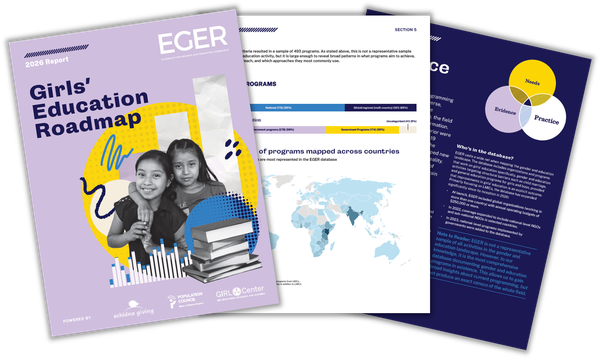
Closing gender gaps in education starts with knowing where they are. The Roadmap provides a path forward towards better learning for all children.
What works to improve enrollment and educational attainment?
-
Address the cost of schooling through cash transfers, scholarships, fee abolition, voucher programs
-
Providing food in school or as take-home rations
-
Improve access to school by constructing more schools, establishing community schools, improving safe transportation, or increasing access to remote learning
-
Providing proper sanitation facilities in schools, especially sex-specific toilets, and school water supply improvements
What works to improve learning?
-
Remedial education or tutoring for girls who are falling behind in school
-
Improve pedagogy through structured pedagogic approaches and competency grouping.
-
Curriculum-aligned education technology that complements instruction - not a replacement for it
-
After-school instructional support
-
Provide food in school or as take-home rations.
-
Provide ongoing teacher training or coaching.
A framework for progress

EGER developed its needs, evidence, and practice framework to close the gap between education policies and what actually works. Too often, governments and organizations invest in programs without knowing if they make a real impact, while researchers chase interesting questions that don’t always match what girls' actually need. That’s where the Girls’ Education Roadmap Series comes in. By connecting the dots between needs, evidence and practice, we help ensure that investments go where they’re needed most and are backed by solid research.
Check out past Roadmaps!


